







0 commentaires
To choose your protein, two main criteria will be the guiding principles that you should follow in their selection. Firstly, quality is paramount for your protein choice. It will be decisive for achieving your goals and also for preserving your health. Finally, your personal goals will guide you in this choice.
Why take protein?
The usefulness of proteins
Proteins are one of the three macronutrients essential for the normal functioning of the body, along with fats and carbohydrates. They play a role in the growth and renewal of tissues, including muscles, but also have other functions such as physiological ones. Proteins must be supplied in sufficient quantities through diet to nourish these muscle cells and fulfill vital body functions. Indeed, the body cannot synthesize all amino acids on its own.
For an athlete, the recommended daily doses vary between 1.5 to 1.8 g/kg/day of protein.
Why take protein powder?
Having mentioned the importance of consuming proteins in general, we will now look at the advantages of consuming them in powder form.
Here are some of the benefits of taking protein powder, in the form of food supplements:
- Improves post-workout recovery: Proteins are essential for muscle tissue recovery and repair after training. Consuming protein powder post-workout can help reduce muscle soreness and improve recovery, which can help improve performance in subsequent training sessions.
- Increases muscle mass: Protein powder can help increase muscle mass when consumed as part of a strength training program. Protein powder contains amino acids, which are the building blocks of proteins, necessary for muscle protein synthesis.
- Helps with weight loss: Protein powder can help lose weight by reducing appetite and increasing satiety. Protein powder can also help maintain muscle mass during weight loss, which can help burn fat more efficiently.
- Easy to use and transport: Protein powder is easy to use and transport, making it ideal for people with busy and active lifestyles. Protein powder can be added to smoothies, shakes, yogurts, energy bars, and even cooking recipes.
What quality to choose for your protein?
Different criteria must be taken into account to choose the best possible quality protein.
The quality of the aminogram
The aminogram of proteins is one of the determining elements for choosing your protein powder to optimize its effects. Having a complete aminogram, not deficient in one or more essential amino acids, is a criterion to consider when choosing a protein.
An aminogram is an analysis that measures the amounts of amino acids present in a protein. It is important to understand how to interpret an aminogram to recognize the quality of protein powders. Here are some points to consider:
- The content of essential amino acids: Essential amino acids are those that our body cannot produce itself and must therefore be supplied through diet. Protein powders must contain all essential amino acids in sufficient quantities to be considered a quality protein source. Essential amino acids include leucine, isoleucine, valine, lysine, methionine, phenylalanine, threonine, and tryptophan.
- The content of branched-chain amino acids: Branched-chain amino acids (BCAAs) are essential amino acids important for muscle building. They include leucine, isoleucine, and valine. Protein powders should contain adequate amounts of BCAAs to support muscle growth.
- Amino acid profile: High-quality proteins have a complete and balanced amino acid profile. This means that all forms of amino acids are present in sufficient quantities to support bodily functions.
What about plant proteins?
Plant proteins seem to be a good alternative to animal proteins, but the reality is more complex. Indeed, they are 3x to 5x less expensive to produce and sell for 1.5x to 3x more. Plant proteins are also less well assimilated, so their effect is reduced. In most cases, they will have an incomplete aminogram and will not be optimal for muscle building.
The different extraction methods
One method of extracting protein powder is ultrafiltration. This method involves passing the protein through a porous membrane that only allows protein molecules of the appropriate size to pass through. Impurities and other molecules are filtered out, leaving a highly concentrated protein powder. This method is often used to produce protein powders with high protein content and low fat and carbohydrate content.
Microfiltration is another method of protein powder extraction. It uses a finer filtration membrane than ultrafiltration, which filters protein molecules of the appropriate size while allowing smaller peptides and amino acids to pass through. This method is often used to produce higher quality protein powders, containing peptides and amino acids that can be absorbed more quickly by the body.
A more traditional method of protein powder extraction is salt precipitation. This method involves adding a salt to the protein solution, which causes the proteins to precipitate as a powder. This method is often used to produce cheaper protein powders, but it can also alter the properties of the protein, making it less effective for muscle building.
The different filtration methods
There are three types of whey available on the market: whey concentrate, whey isolate, and hydrolyzed whey.
Whey concentrate is the most common form of whey protein. It is produced by filtering whey to remove water, fats, and carbohydrates. Whey concentrate generally contains between 70% and 80% protein, with the remainder composed of lactose, fats, and minerals.
One advantage of whey concentrate is that it is cheaper than other forms of whey protein. It can also contain more nutrients than other forms of whey protein because it is not as processed. However, whey concentrate can contain more lactose and fats than other forms of whey protein, which can be a problem for people who are lactose intolerant or who are trying to reduce their fat intake.
Whey isolate is a purer form of whey protein. It is produced by filtering whey repeatedly to remove the majority of fats, carbohydrates, and lactose. Whey isolate generally contains more than 90% protein.
One advantage of whey isolate is that it contains less fat and lactose than whey concentrate, which can be beneficial for people who are lactose intolerant or who are trying to reduce their fat intake. Whey isolate is also absorbed more quickly by the body than whey concentrate, making it ideal for consumption immediately after training.
Hydrolyzed whey is the most advanced form of whey protein. It is produced by treating whey with enzymes to break down proteins into smaller, more easily absorbable peptides. Hydrolyzed whey generally contains more than 90% protein.
One advantage of hydrolyzed whey is that it is absorbed even more quickly by the body than whey isolate, making it ideal for consumption immediately after training. It is also less likely to cause bloating or digestive problems than other forms of whey protein.
Ultimately, the choice between whey concentrate, whey isolate, and hydrolyzed whey depends on your needs and constraints.
What protein sources to choose?
Native whey or cheese whey?
Native whey comes directly from cow's milk. The raw material then consists only of milk proteins and not cheese by-products. It does not require any chemical manipulation or addition of dubious products. Naturally, it therefore does not contain GMPs.
Finally, it has a very high-quality undenatured aminogram. It is rich in essential amino acids as it contains all 10 essential amino acids in proportions that allow for increased muscle growth.
For cheese whey, the raw material is completely denatured due to a chemical process that alters the molecular structure of milk proteins to turn them into cheese.
During cheese making, chemical reagents are introduced into the milk. This chemical process leads to the appearance of GMPs (Glycomacropeptides) in cheese whey. GMPs are not natural proteins; they consist of an agglomerate of sugars (up to 30%) and amino acids (up to 70%). But that's not all; as the obtained whey takes on a yellowish appearance, it is generally bleached using a chemical decolorant. Moreover, according to scientific analyses, traces of chemical preservatives are found in cheese whey.
Native whey is therefore the best whey that can be produced and consumed because it is of high quality and undenatured.
Egg proteins
Egg protein powder is a very good alternative to milk proteins, with a very complete aminogram. It allows for diversifying protein sources and thus optimizing muscle development. It is also a very good option for people who are lactose intolerant.
However, pay attention to the origin of the eggs; make sure they come from free-range hens.
Meat proteins
On the dietary supplement market, there are also beef, pork, or even chicken proteins. These protein powders are often made from meat scraps. We strongly advise against turning to this type of protein.
The importance of purity in protein powder
What additives are present in protein powder supplements?
Get into the habit of examining the ingredients of protein powders to check for the presence or absence of additives that are not beneficial to your health.
This is the case, for example, with soy lecithin, present in some protein powders. Its problem lies. Indeed, although it may not have negative health impacts, since the arrival of GMOs, some manufacturers using soy lecithin do not know whether it contains them or not. Unless you have a traced and reliable source for soy lecithin, prefer a protein without this additive.
The presence of sucralose in proteins provides a sweetening power to proteins without glycemic impact and without danger to health if consumed in moderation.
For a purer composition, opt for an unflavored protein when possible, and mix it yourself.
Which whey to choose according to your sports goals?
Now that you know how to distinguish a good protein from a bad one, it is important to choose the one that suits you best.
The choice of proteins should be correlated with the time of your workouts so as not to disturb them. Proteins can weigh on the stomach if taken just before. This choice will therefore be personal to each individual and depend on your physical goals.
Compare our proteins according to your needs to make the most suitable choice!
According to your physical goals
Depending on your sport and your physical goals, the proteins to prioritize will be different. (see the table below)
Proteins for mass gain
For rapid mass gain: Musclemasse – Hard gainer
Nutrimuscle's Musclemasse Hard Gainer is dedicated to athletes who want to gain muscle mass quickly. It is aimed at beginners or individuals with an ectomorphic physique (who have difficulty gaining weight), and they can then switch gainers as they see their physique gain volume.
For this, it is composed of 75% carbohydrates and 20% proteins. The anabolic properties of Musclemasse are attributed to native whey and total milk proteins. In addition, the fast-absorbing carbohydrates: Maltodextrin and Dextrose contained in the gainer, are easy to absorb and digest. Thus, thanks to the increase in muscle strength and its high energy intake, Musclemasse helps facilitate the athlete's progress.
For lean mass gain and limiting fat: Lean Gainer Egg Protein & Oat
The Lean Gainer Egg Protein & Oat is suitable for athletes who want to gain lean muscle mass. It is aimed at individuals who already have an intermediate level or those with an endomorphic physique and who want to be careful about fat gain.
For controlled mass gain: Lean Gainer Whey & Oat
We recommend Lean Gainer Whey & Oat to people wishing to maintain their muscle mass while controlling their weight gain. Thanks to its richness in fiber and protein, it provides an effective feeling of satiety. It is composed of 41% protein, 40% carbohydrates, 7% lipids, and almost 10% BCAA.
Proteins for muscle gain
Native whey isolate: native whey isolate provides the amino acids necessary for muscle growth and recovery. This protein stimulates anabolism and repairs muscle fibers damaged by exertion.
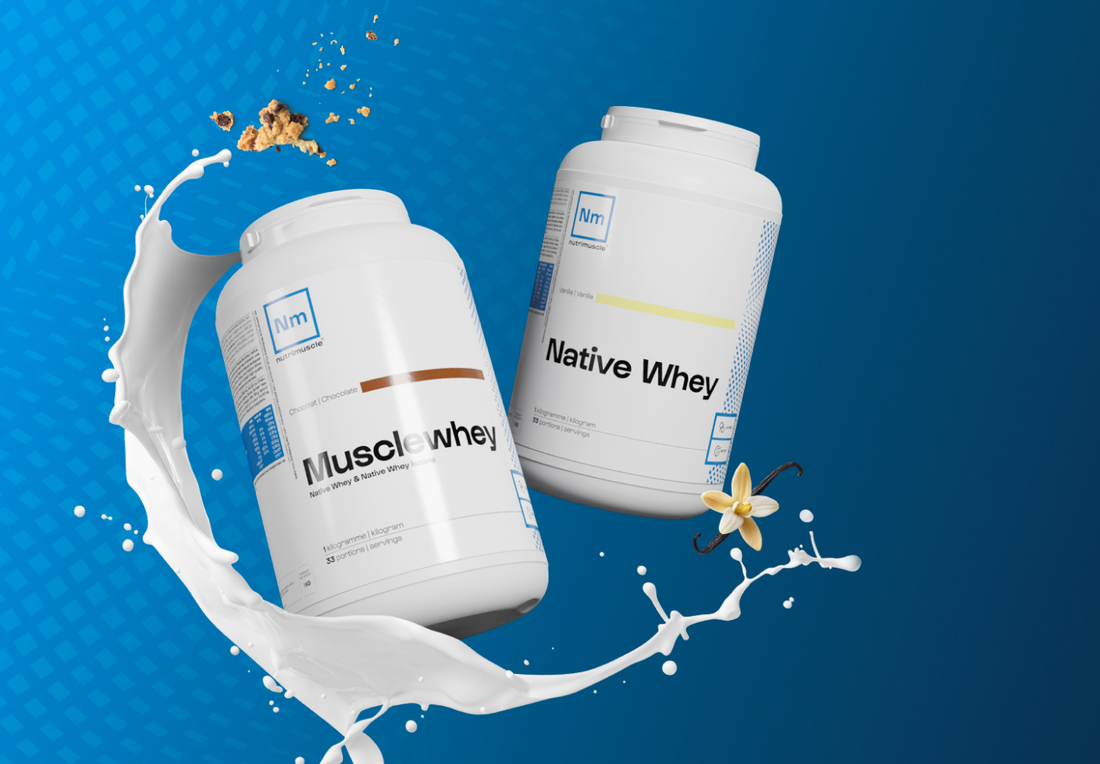
MuscleWhey: this blend of native whey and native whey isolate provides a sustained action on protein synthesis for powerful anabolism and optimal recovery.
Micellar casein isolate: the double action of casein isolate allows, on the one hand, an anabolic action thanks to the rapid assimilation of whey and, on the other hand, an anti-catabolic action thanks to the slow assimilation of micellar casein.
Proteins for cutting
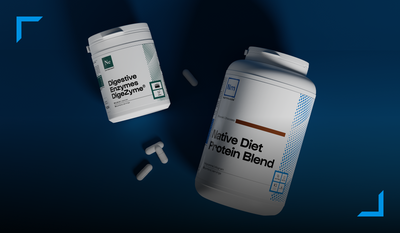
Diet Protein Blend: the protein and nutri-fiber intake with the Diet Protein Blend contributes, thanks to their satiating effects, to weight loss. Indeed, the blend helps control your caloric intake and limit excessive snacking. The Diet Protein Blend thus limits fat intake in the body.
Micellar casein is a protein that is assimilated much more slowly than whey. It therefore provides amino acids to the muscles in a constant and prolonged manner. This allows for maintaining high anabolism over several hours and facilitating fat burning during this period. In summary, you preserve your muscles while burning more fat.
Micellar casein digests slowly, so it provides an appetite-suppressing effect that allows you to space out your meals more and moderate your appetite. Thanks to these effects, you will optimize your weight loss.
It is therefore the best protein to consume during a cutting phase.
For what time of use?
There are different types of proteins, each with a different assimilation speed:
- Casein will have slow assimilation, providing a strong feeling of satiety.
- Whey concentrate, or whey, is the most common protein with a medium assimilation time.
- Whey isolate will have very rapid assimilation by the body and a higher protein content than classic whey.
- Hydrolyzed casein, on the other hand, will have the fastest assimilation, as it is already pre-digested.
Lactose intolerance
If you don't digest lactose well, here are the alternatives available to you:
The first solution will be to consume egg proteins, as mentioned above.
For people wishing to consume milk proteins, different solutions are available. Wheys fortified with lactase, the enzyme that allows lactose digestion, make it possible to consume milk proteins without digestive problems.
Finally, taking low-lactose whey is also an alternative.

