







0 commentaires
The Achilles tendon connects the calf muscles to the heel bone; it transmits propulsion force during plantar flexion (standing on tiptoes). Subject to high stress during physical exertion, it can become irritated, leading to Achilles tendinitis or, eventually, tendon rupture.
It is better to act upstream: adopt habits that reduce tension, promote recovery, and delay the onset of tendinitis.
Read on to learn all about it!
Understanding Achilles Tendinitis
Achilles tendinitis is the inflammation of the tendon caused by repeated micro-traumas: too rapid an increase in sports activity, hard surfaces, calf weakness, or inappropriate footwear. Pain first appears at the beginning of activity, then becomes persistent if the signals are ignored.
Prevention is Better Than Cure
-
Progressive loading: increasing the distance or intensity of your runs by less than 10% per week limits micro-tears.
-
Wearing appropriate footwear: good cushioning and a slight drop reduce traction on the tendon; in case of flat feet or high arches, orthotic insoles rebalance the support.
-
Active breaks during prolonged sitting: getting up regularly and doing a few calf raises loosens the tendon and restarts circulation.
-
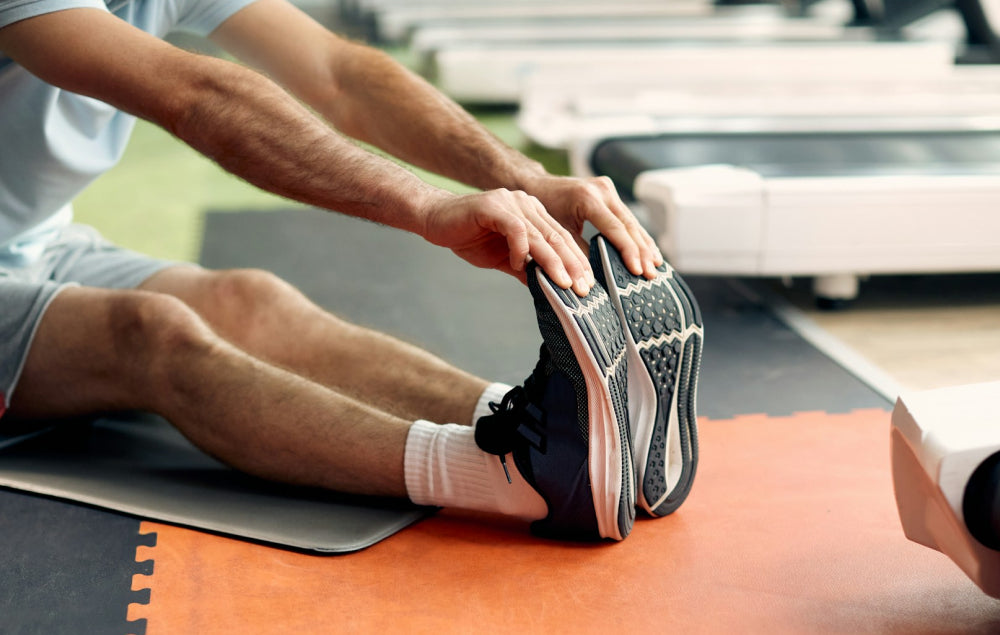
Stretching exercises and eccentric strengthening: slowly lowering from a step on one foot, heel suspended, then rising on two feet - a series of 15, once or twice a day - has recognized effectiveness in relieving pain and strengthening the structure.
-
Ice after exercise: 10 minutes on the sensitive area limits the inflammatory reaction.
-
Non-steroidal anti-inflammatory drugs (NSAIDs): to be used occasionally, on medical recommendation, if discomfort becomes acute.
Warning Signs and What to Do
Persistent pain upon waking, swelling or morning stiffness of the tendon: these are early indicators. Reduce intense outings, replace them with cycling or swimming to continue training while offloading the tendon.
If the pain worsens or if you notice a painful nodule along the tendon, consult a doctor quickly: a precise clinical examination will prevent progression to tendon rupture.
Return to Activity After Tendinitis
A well-managed recovery combines relative rest, physiotherapy, and eccentric rehabilitation. Running is reintroduced on soft ground, alternating walking and jogging to test tolerance.
Temporary wearing of a small five-millimeter heel insert in the shoe or a heel lift reduces traction during the first few weeks.
